
The English Olive Press; March ‘26
Welcome to the March edition of The English Olive Press. Water management has been busy, we have had some great visits to the grove, wildlife has been counted and hopefully fenced out, and you get 10% OFF our shop this month!

Thank you to all those who have subscribed to our Newsletter and you are now members of our English Olive Oil Club! Before we share timely news on social media we will update you, our English Olive Oil Club members, with the news first, giving you a heads up on what we are up to and imminent product availabilities. This month we are also giving you 10% off everything at our website Shop. Please use the code MARCH10 for a one use 10% discount, expiring at the end of this month. A big welcome to those of you who are new to reading this and if would like to Subscribe then please head to our website Home page, and click ‘Subscribe to The Olive Press’
As we look back at the month of February, it is always a month of anticipation and expectation before we head into Spring, but the month of February also needs patience! Day length starts to increase, wildlife becomes more visible and the snow drops and daffodils remind us that Spring is just around the corner, hopefully bringing warmth and sunshine! If we try to encourage growth in our trees too early and cold weather returns we can do more harm than good.
Winter 2025/26 rainfall has been excessive but needed! With 2025 being our second driest year on record (2011 was our driest) then soil moisture reserves had been used and reservoirs were empty. During this winter we have had 193mm (7.5”) rainfall, and combined with the 117mm (4.5”) in November, then, I am sure you will be aware, the soil water profile has been totally refilled! Drainage pipes under the soil (land drains) are running, and through our Environment Agency Abstraction License we are extracting surplus water from the dykes and drains to fill up our reservoirs.
Olive trees can survive with very little water, but to maximise olive production then the trees can make use of significant amounts of water. To measure water availability we use a good spade and also a soil moisture probe that measures moisture levels at 10cm increments through the soil profile, down to 65cm. During the 2025 Spring and Summer we only had 168mm (6.6”) of rainfall, and to help keep the trees at optimum development we supplied them through our precision trickle (drip) irrigation pipes a further 380mm (15”) of water…..our olive trees needing far more water than a potato crop! With the reservoirs now nearly full we will be able to support the olive trees water needs in 2026 as required.
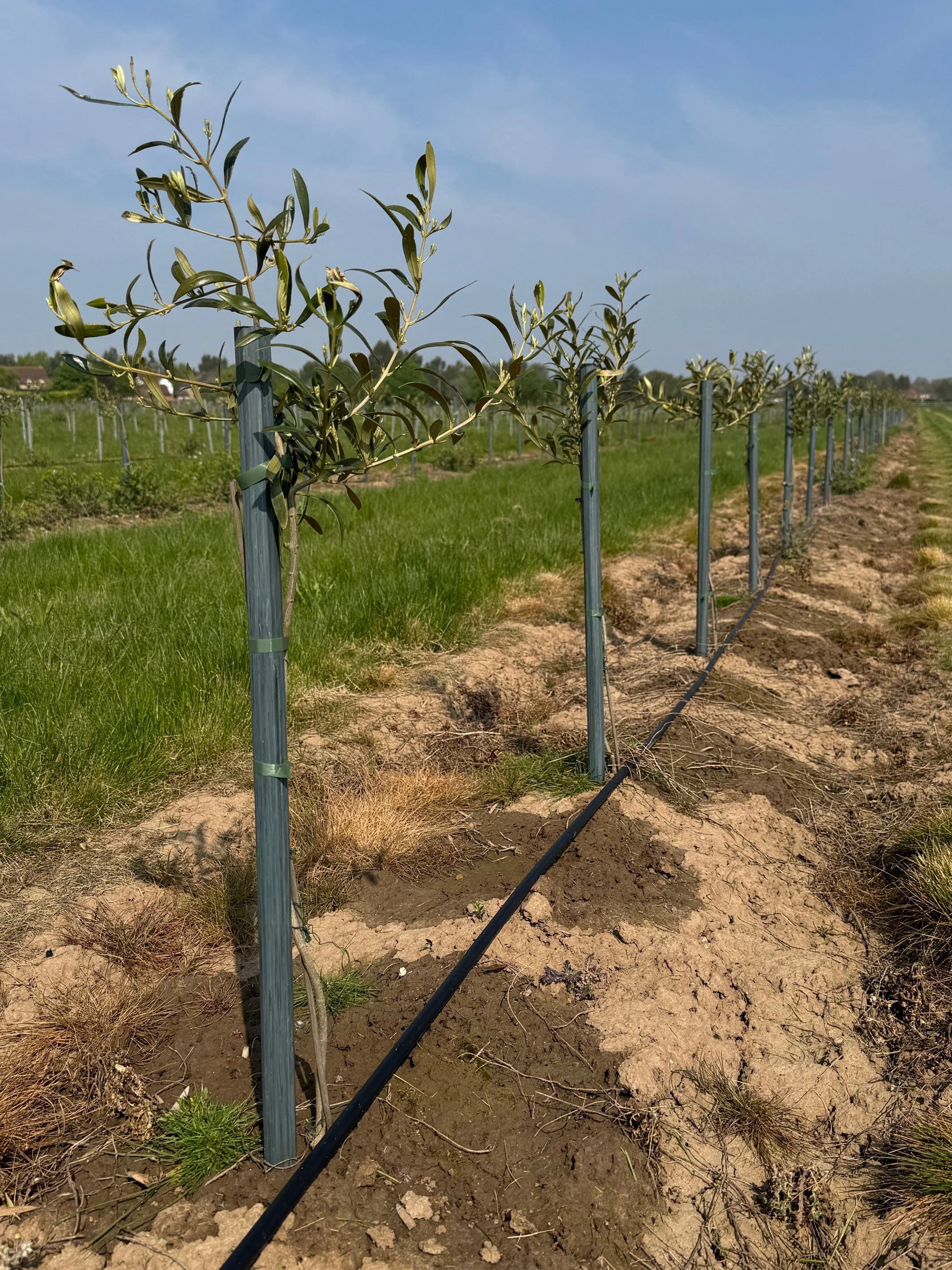
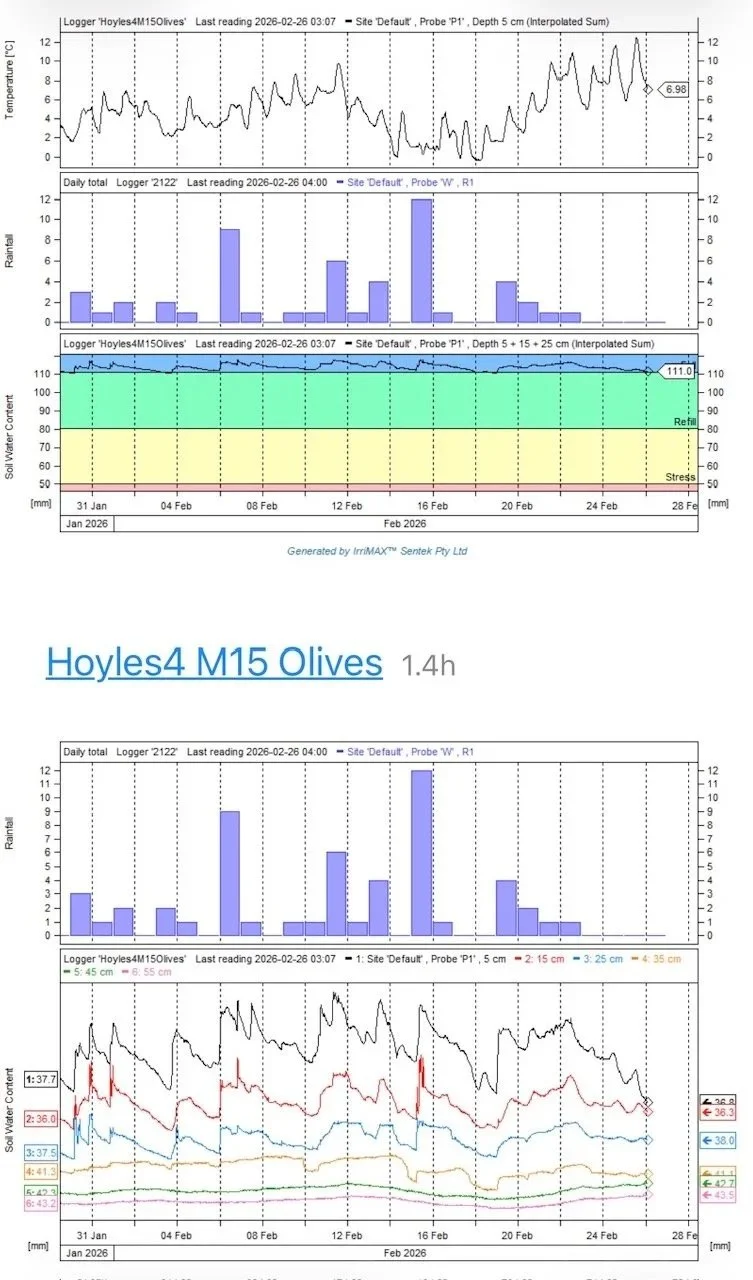
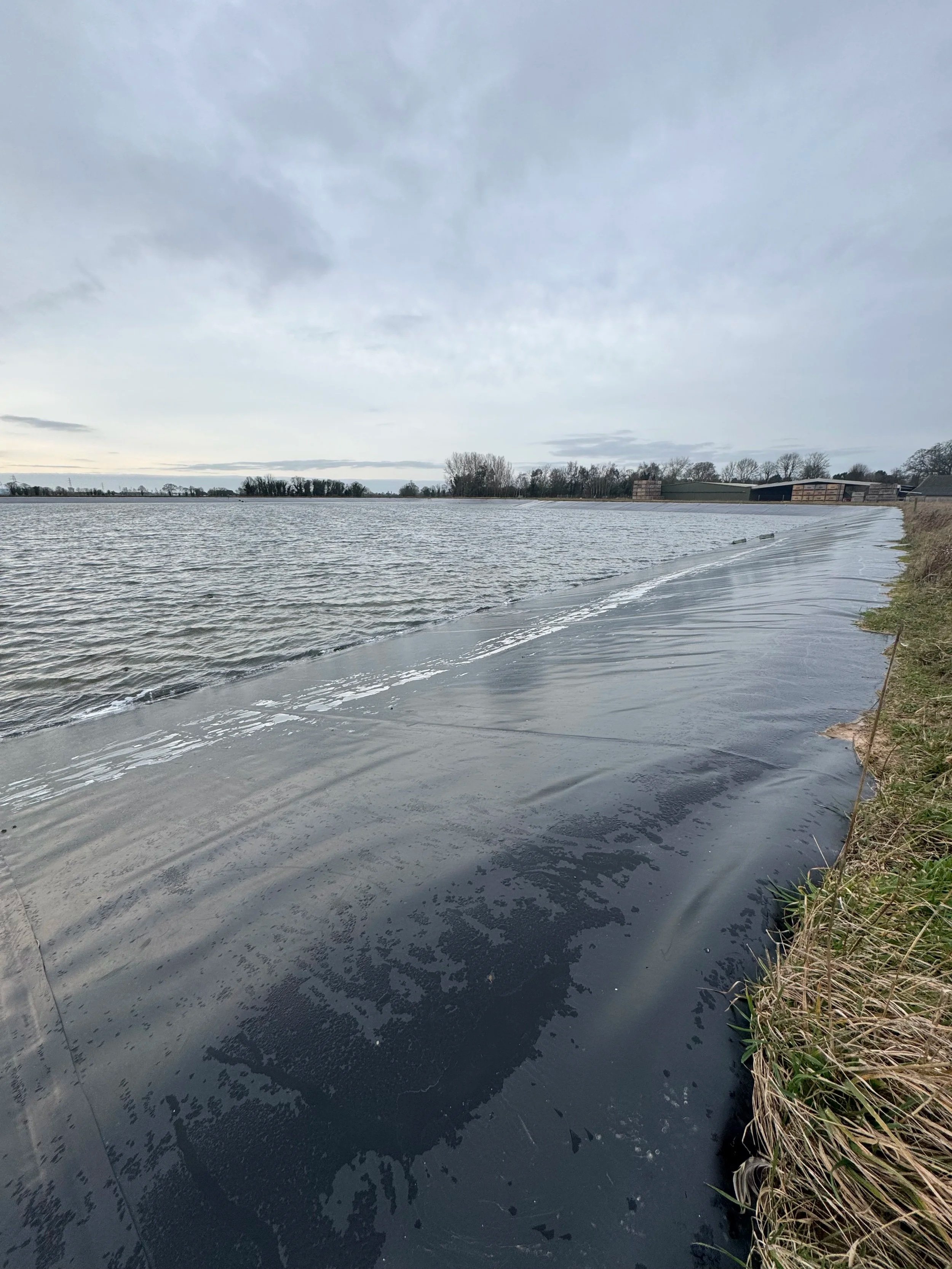
Trickle (drip) irrigation last Spring, Soil Moisture Probe data for Feb 2026, Reservoirs filling up nicely.
Following a successful local Lincolnshire Grants 4 Growth (G4G) application back in Autumn 2025 we had a couple of visits from teams from Lincolnshire County Council to The English Olive Company last month. Business Lincolnshire have also offered practical online and in person advice for business growth and initiatives. A big thank you in particular to Gordon, Deborah, Janet, Simon, and Paul.
Gordon and Deborah were personally involved in our G4G application, and it was great to be able to show them the olive grove, the olive press, and associated equipment which they had seen from the paperwork side of things. Barbara and Effie from UK Food Valley asked and answered plenty of questions on their visit, especially with Barbara’s knowledgeable Mediterranean ancestry, and Kate shared insights into how we can drive the business forward. Both visits had a walk around the 10 olive tree varieties, learning about their different growth habits, flowering times and olive shapes and colours, and then a look over the olive press and bottling equipment, before doing a taste test between new season Italian, Spanish and our English Olive Oil.
Going forward we hope to utilise the great facilities at the Holbeach Food Enterprise Zone for olive oil quality tasting and testing, and to keep up with technological gains they are making. Being surrounded by many market leading food businesses also allows us to network and share ideas, which could even lead to foody collaborations and tasting events in the future!
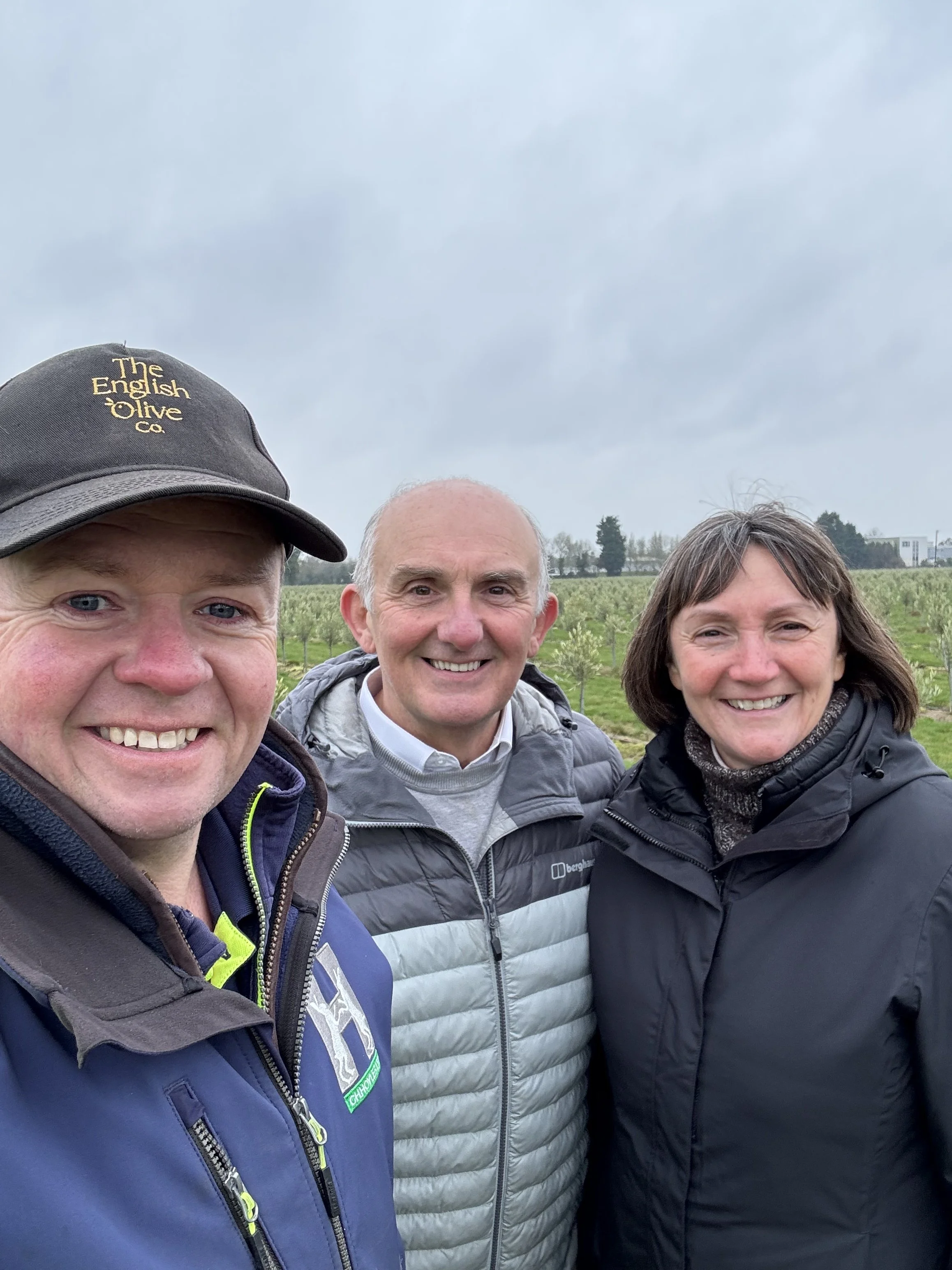
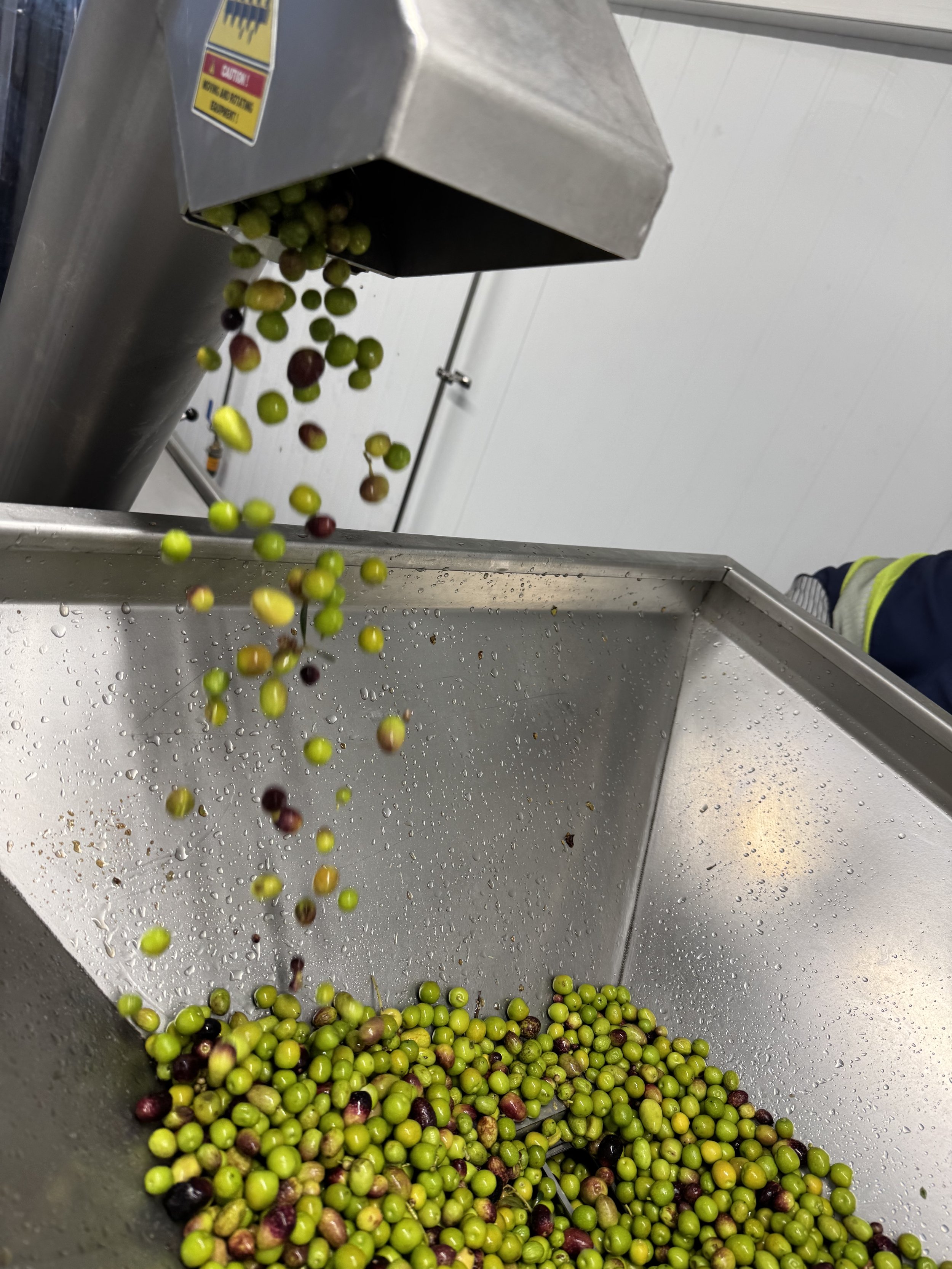
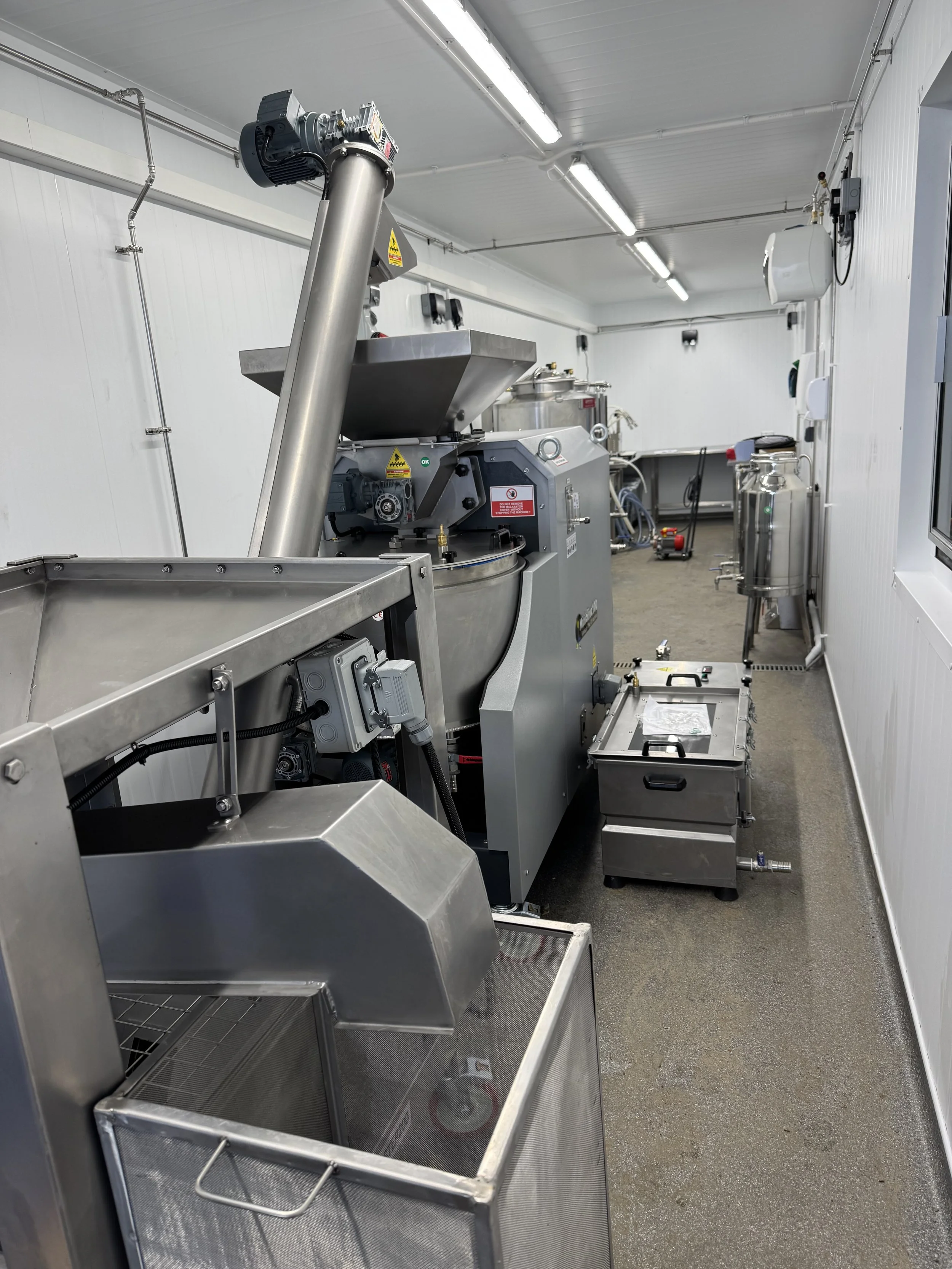
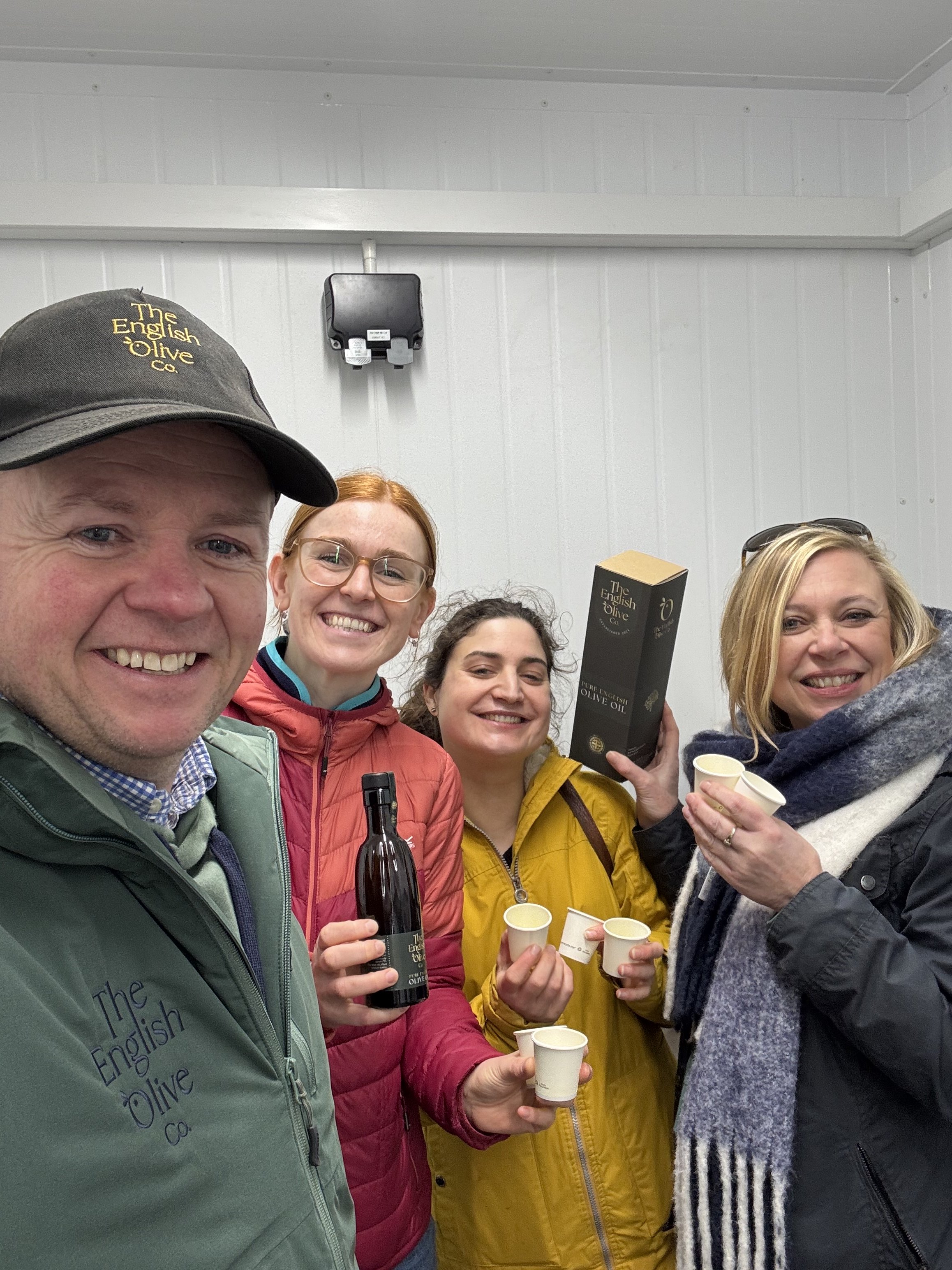
Gordon and Deborah from Business Lincolnshire. The English Olive Co 100kg/hr olive washing and press line. Effie, Barbara and Kate from UK Food Valley and Lincolnshire CC.
In addition to our hand carved and branded olive wood heart shaped bowls, it was great working with local luxury leather brand Priestleys for our Valentines Olive You offering. Thank you all very much for supporting this, and we hope the bowls and bag / bottles ties were warmly received. Our English Olive Grove Blossom honey is still very much in demand, and for those who like caffeine free tea, then please do give our English Olive Leaf Tea a try!
During February we took part in the Big Farmland Bird Count which is run by the Game & Wildlife Conservation Trust (GWCT). This annual event encourages farmers and land managers to record bird species and numbers on their farms. The count aims to raise awareness of the important role they play in helping our farmland birds, and to measure the impact of the conservation work that is being carried out. In and around the olive grove we have erected owl boxes and sparrow apartments (sparrows like to live in colonies, so we have 10 bedroom sparrow boxes!), and also bug pods and our seasonal bee hives. During our 30 minute Big Farmland Bird Count we recorded many species including kestrel, buzzard, wren, robin, blue tit, wagtail. and pheasant. We will continue to do take part in the Big Count each year to see how bird population evolves as the olive grove matures.
While we are trying to encourage birds in and around our olive grove, then we are certainly not trying to encourage the local rabbit, brown hare and deer population! Since the start of this year when the weather turned cooler then the rabbits and brown hare in particular have been coming in to the olive grove at nightfall, and have been nibbling on the bark and also chewing off leaves and branches. The stripping of the bark can lead to disease infection, frost ingress, and can even lead to tree death. Due to the high oleic acid content in the leaves they are not too tasty for the rabbits and brown hares, so they chew these off and don’t eat them, and move to the next tree and do the same, thinking it may taste different, but it doesn’t! Eat, sleep, repeat, and they were soon causing a bit of trouble. To help keep them out of the olive grove then we have put up a 1.2m heavy duty chicken wire fence, dug into the ground 20cm, and staked at 3m intervals. Hopefully this will deter many, and allow the trees to recover and proposer as we enter Spring.
For those of you who like to listen to podcasts, then back in the middle of February Bev Mullard interviewed David on all things family farming and our entry into growing olives, on her podcast called Pasture Bedtime, with us featuring on Episode 13. Bev was a great host and knows rural life very well, and the half hour chat included discussions on soil health, changing consumer diets, succession planning, farm diversification, water management and starting a new brand and olive business from scratch. Please click on this link if you would like a listen; https://podcasts.apple.com/au/podcast/ep-13-david-hoyles-just-by-chance-while-i-was-on-a/id1850272986?i=1000749811149
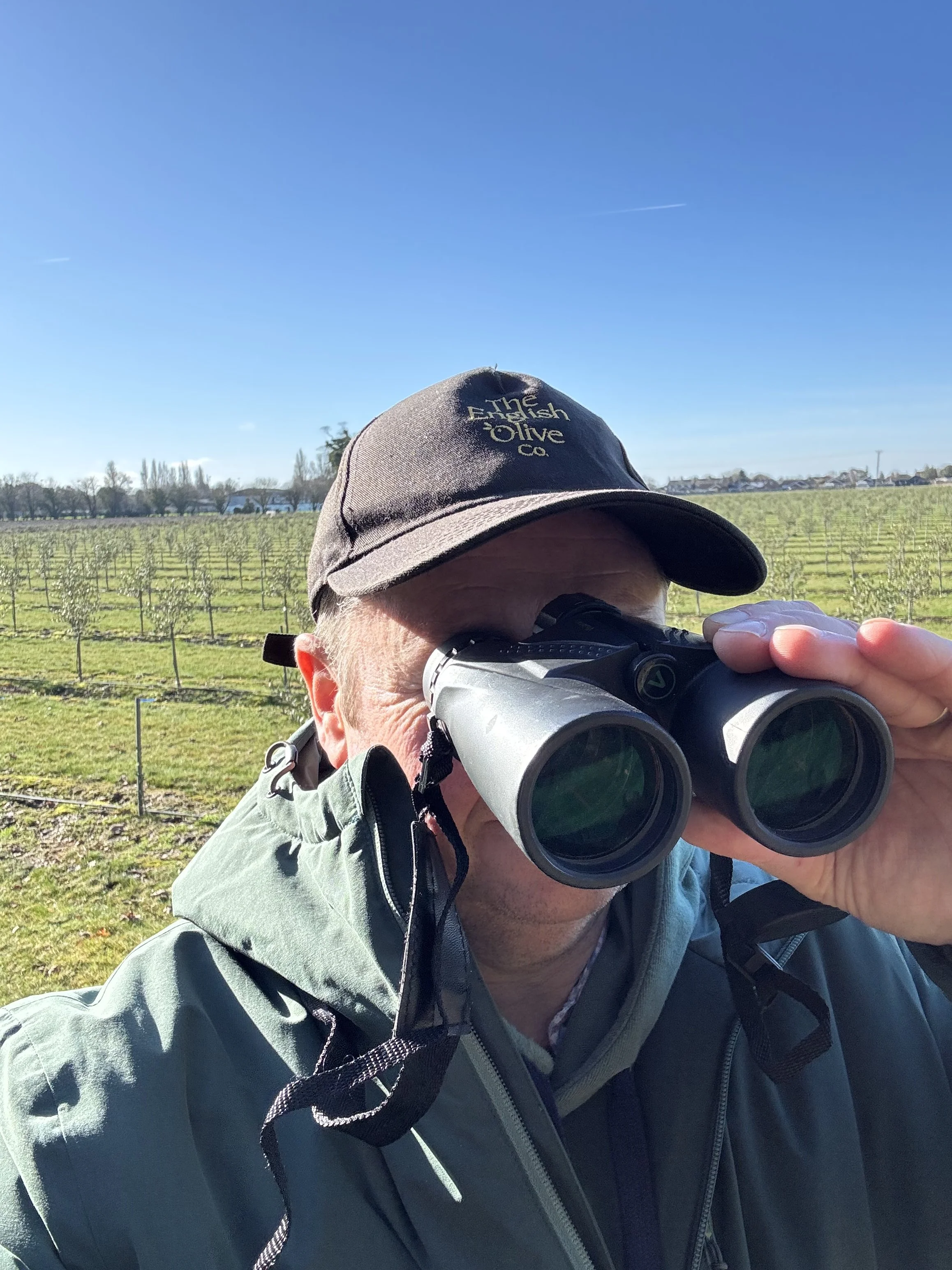
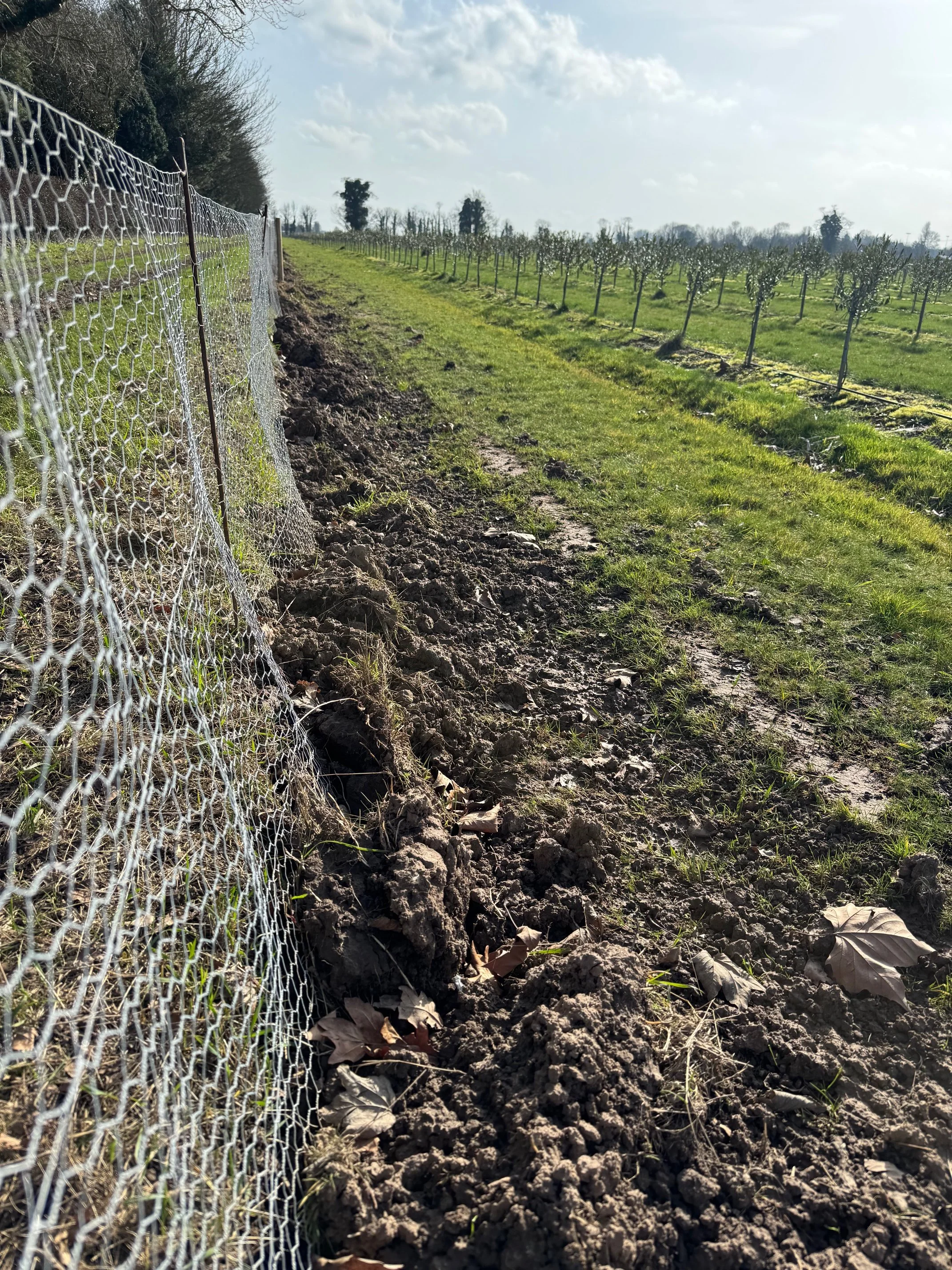
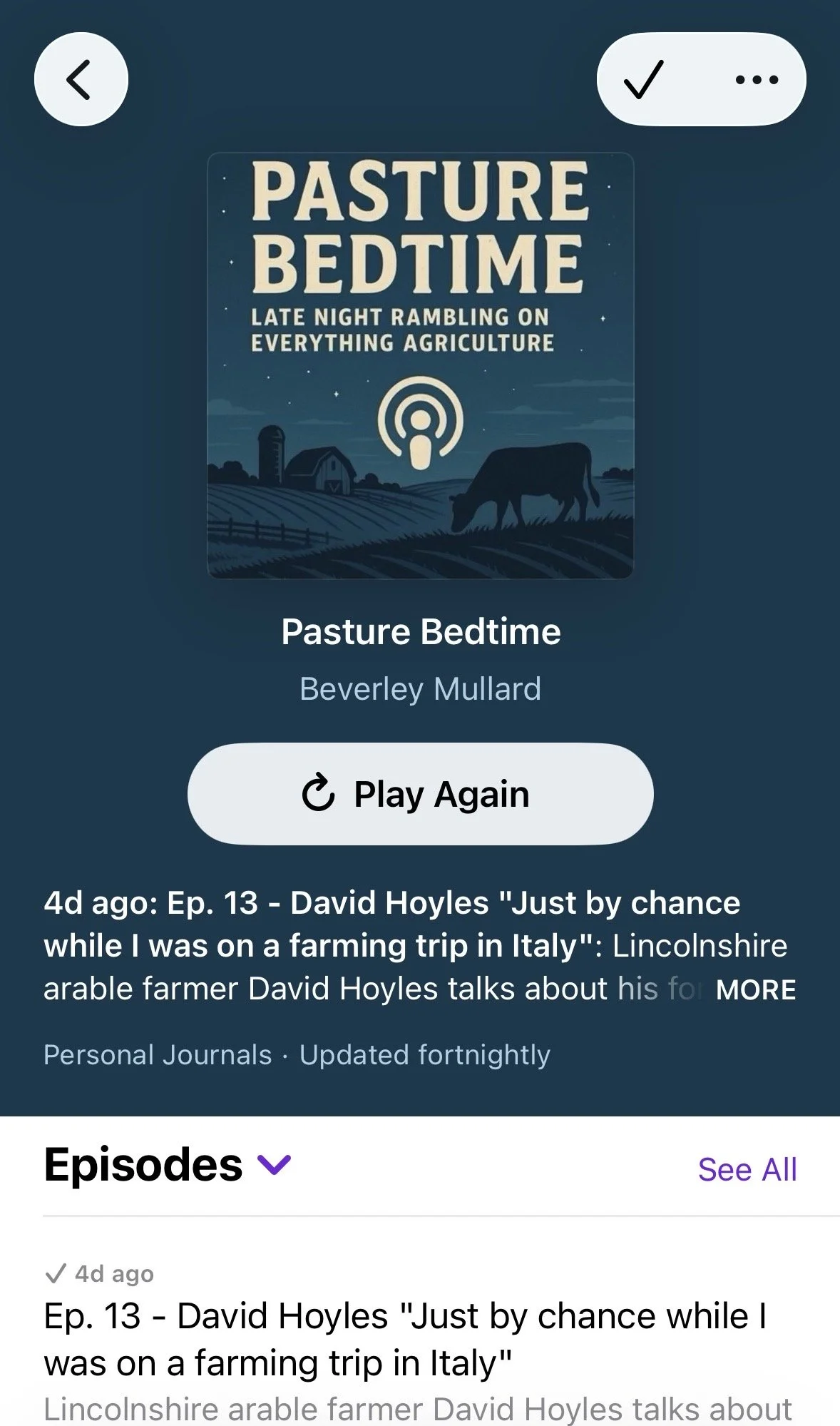
Big Farmland Bird Count. Keeping the rabbits and brown hare out. Bev Mullard podcast with David.
We look forward to the English Olive grove coming alive as we get further into spring, and keep your eyes peeled for a certain olive business being featured in Country Life magazine this month! If you would like to visit our website shop, then please remember to use the code MARCH10 for a one use 10% discount, valid until 31st March 2026.
Best wishes,
David